Language:en 
- zh-cn
- en
- ja
- fr
- ko
- de
- pt-pt
- es
BEYOND CIRCUIT


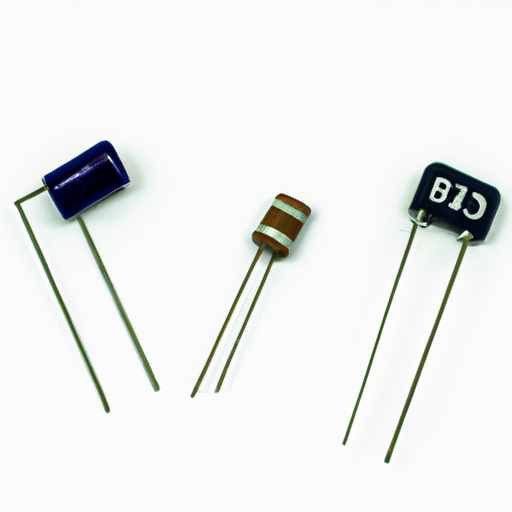
Resistors are fundamental components in electronic circuits, serving as the building blocks for controlling current flow and voltage levels. They are passive devices that resist the flow of electric current, allowing engineers and hobbyists to design circuits that function as intended. Understanding the different types of resistors and their characteristics is crucial for anyone involved in electronics, whether for professional applications or personal projects. This article aims to explore three popular models of common resistors: carbon film, metal film, and wirewound resistors. We will delve into their construction, advantages, disadvantages, and typical applications, providing a comprehensive overview to help you make informed decisions when selecting resistors for your projects.
A resistor is an electronic component that limits the flow of electric current in a circuit. Its primary function is to provide a specific resistance value, measured in ohms (Ω), which determines how much current will flow for a given voltage according to Ohm's Law (V = IR). Resistors are essential for controlling voltage levels, dividing voltages, and protecting sensitive components from excessive current.
Resistors serve various purposes in electronic circuits, including:
Current Limiting: Protecting components from excessive current.
Voltage Division: Creating specific voltage levels for different parts of a circuit.
Signal Conditioning: Modifying signal characteristics for better performance.
There are several types of resistors, each designed for specific applications. The most common types include carbon film, metal film, and wirewound resistors, which we will discuss in detail later.
When selecting a resistor, several key specifications must be considered:
The resistance value indicates how much the resistor will resist current flow. It is measured in ohms (Ω) and can range from fractions of an ohm to millions of ohms.
The power rating indicates the maximum amount of power the resistor can dissipate without overheating. It is measured in watts (W) and is crucial for ensuring the resistor operates safely within its limits.
Tolerance refers to the accuracy of the resistor's resistance value. It is expressed as a percentage and indicates how much the actual resistance can vary from the stated value. For example, a resistor with a tolerance of ±5% can have a resistance value that is 5% higher or lower than its nominal value.
The temperature coefficient indicates how much the resistance value changes with temperature. It is expressed in parts per million per degree Celsius (ppm/°C) and is essential for applications where temperature fluctuations are expected.
Carbon film resistors are made by depositing a thin layer of carbon on a ceramic substrate. The resistance value is determined by the thickness and length of the carbon film, which can be adjusted during manufacturing.
Cost-effectiveness: Carbon film resistors are generally inexpensive to produce, making them a popular choice for many applications.
Availability: They are widely available in various resistance values and power ratings.
Temperature sensitivity: Carbon film resistors can be affected by temperature changes, leading to variations in resistance.
Limited power ratings: They are not suitable for high-power applications due to their lower power handling capabilities.
Carbon film resistors are commonly used in general-purpose applications, such as audio equipment, consumer electronics, and low-power circuits.
Metal film resistors are constructed by depositing a thin layer of metal onto a ceramic substrate. The resistance value is determined by the width and length of the metal film, which can be precisely controlled during manufacturing.
Precision and stability: Metal film resistors offer higher accuracy and stability compared to carbon film resistors, making them ideal for precision applications.
Low noise: They produce less electrical noise, which is crucial for sensitive electronic circuits.
Higher cost compared to carbon film: The manufacturing process for metal film resistors is more complex, resulting in a higher price point.
Limited power handling: While they are more robust than carbon film resistors, they still have limitations in high-power applications.
Metal film resistors are commonly used in precision circuits, such as instrumentation, audio equipment, and high-frequency applications.
Wirewound resistors are made by winding a metal wire around a ceramic or fiberglass core. The resistance value is determined by the wire's length, diameter, and material.
High power ratings: Wirewound resistors can handle significant power levels, making them suitable for high-power applications.
Excellent heat dissipation: Their construction allows for efficient heat dissipation, reducing the risk of overheating.
Inductance issues: The winding of the wire can introduce inductance, which may affect performance in high-frequency applications.
Bulkiness: Wirewound resistors tend to be larger and heavier than other types, which may be a consideration in compact designs.
Wirewound resistors are commonly used in power supplies, motor control circuits, and high-current applications.
Metal film resistors excel in accuracy and precision, making them ideal for applications requiring tight tolerances. Carbon film resistors are less precise, while wirewound resistors may introduce inductance that affects performance.
Metal film resistors typically have a lower temperature coefficient, meaning their resistance value is more stable across temperature changes. Carbon film resistors are more sensitive to temperature variations, while wirewound resistors can also be affected but to a lesser extent.
Wirewound resistors have the highest power handling capabilities, making them suitable for high-power applications. Carbon film resistors have limited power ratings, while metal film resistors fall in between.
Carbon film resistors are the most cost-effective option, making them suitable for budget-conscious projects. Metal film resistors are more expensive due to their precision and stability, while wirewound resistors are typically the most expensive due to their construction and power handling capabilities.
Carbon Film Resistors: Best for general-purpose applications where cost is a primary concern.
Metal Film Resistors: Ideal for precision applications requiring accuracy and low noise.
Wirewound Resistors: Suitable for high-power applications where heat dissipation is critical.
In summary, understanding the different models of resistors is essential for anyone involved in electronics. Carbon film, metal film, and wirewound resistors each have unique characteristics, advantages, and disadvantages that make them suitable for specific applications. Choosing the right resistor model is crucial for ensuring the performance and reliability of electronic circuits. As technology continues to evolve, we can expect advancements in resistor technology, leading to even more efficient and versatile components in the future.
- "The Art of Electronics" by Paul Horowitz and Winfield Hill
- "Electronic Principles" by Albert Malvino and David Bates
- IEC 60115: Resistors for use in electronic equipment
- EIA-198: Standard for Fixed Resistors
- Electronics tutorials on websites like All About Circuits and Electronics-Tutorials.ws
- Online courses on platforms like Coursera and edX focusing on electronics and circuit design.
By understanding the characteristics and applications of these three popular resistor models, you can make informed decisions that enhance the performance and reliability of your electronic projects.