Language:en 
- zh-cn
- en
- ja
- fr
- ko
- de
- pt-pt
- es
BEYOND CIRCUIT


Capacitor current plays a crucial role in electrical systems, serving as a fundamental component in various applications ranging from power factor correction to energy storage. As the demand for efficient electrical systems continues to rise, understanding the market size and growth trends of capacitor current becomes increasingly important. This blog post will delve into the intricacies of capacitor current, its applications, and the factors influencing its market dynamics.
Capacitors are passive electrical components that store and release electrical energy. They operate based on the principle of capacitance, which is the ability of a system to store an electric charge. When a voltage is applied across a capacitor, it accumulates charge on its plates, creating an electric field. This stored energy can be released when needed, making capacitors essential in various electrical circuits.
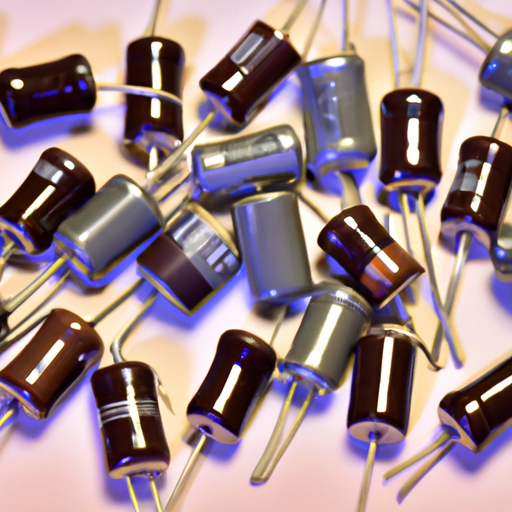
There are several types of capacitors, each with unique characteristics and applications:
1. **Electrolytic Capacitors**: Known for their high capacitance values, these capacitors are commonly used in power supply circuits and audio applications.
2. **Ceramic Capacitors**: These capacitors are widely used in high-frequency applications due to their stability and low losses.
3. **Film Capacitors**: Known for their reliability and low self-inductance, film capacitors are often used in audio and power applications.
4. **Tantalum Capacitors**: These capacitors offer high capacitance in a small package and are used in applications requiring stable performance.
Capacitor current finds applications in various fields:
1. **Power Factor Correction**: Capacitors are used to improve the power factor in electrical systems, reducing energy losses and improving efficiency.
2. **Energy Storage**: Capacitors store energy for later use, making them essential in applications like uninterruptible power supplies (UPS) and renewable energy systems.
3. **Signal Processing**: In electronic circuits, capacitors are used for filtering and coupling signals, ensuring optimal performance.
The capacitor market has experienced significant growth over the last decade, driven by advancements in technology and increasing demand across various industries. The rise of consumer electronics, electric vehicles, and renewable energy sources has further propelled the market.
As of 2023, the global capacitor market is valued at approximately $XX billion, with projections indicating continued growth. The market is segmented regionally, with notable contributions from:
North America: A stronghold for technological innovation and consumer electronics.
Europe: Focused on energy efficiency and renewable energy applications.
Asia-Pacific: The largest market, driven by manufacturing and electronics industries.
Latin America: Emerging markets with growing demand for electrical components.
Middle East and Africa: Increasing investments in infrastructure and energy projects.
The capacitor market is witnessing rapid technological advancements, including innovations in capacitor design and the development of new materials. These advancements enhance performance, reliability, and efficiency, driving market growth.
The demand for capacitors is surging in several sectors:
1. **Consumer Electronics**: The proliferation of smartphones, tablets, and other electronic devices has led to increased capacitor usage.
2. **Automotive Industry**: The shift towards electric vehicles (EVs) and hybrid vehicles is driving demand for capacitors in battery management systems.
3. **Renewable Energy Sector**: As the world moves towards sustainable energy solutions, capacitors play a vital role in energy storage systems and power conditioning.
Government policies promoting energy efficiency and environmental regulations are influencing capacitor production. Manufacturers are increasingly focusing on sustainable practices and materials to comply with regulations and meet consumer demand for eco-friendly products.
The capacitor market is characterized by the presence of several key players, including:
1. **Murata Manufacturing Co., Ltd.**
2. **KEMET Corporation**
3. **Vishay Intertechnology, Inc.**
4. **Nichicon Corporation**
5. **Panasonic Corporation**
These companies dominate the market through innovative products and strategic partnerships.
Leading manufacturers are employing various strategies to maintain their market position:
1. **Mergers and Acquisitions**: Companies are acquiring smaller firms to expand their product portfolios and market reach.
2. **Research and Development Investments**: Significant investments in R&D are aimed at developing advanced capacitor technologies.
3. **Product Diversification**: Companies are diversifying their product offerings to cater to a broader range of applications and industries.
The capacitor market is expected to grow at a compound annual growth rate (CAGR) of XX% over the next five to ten years. Emerging trends, such as the increasing adoption of electric vehicles and advancements in renewable energy technologies, will drive this growth.
Despite the positive outlook, the capacitor market faces challenges, including:
1. **Supply Chain Issues**: Disruptions in the supply chain can impact production and delivery timelines.
2. **Competition from Alternative Technologies**: The emergence of alternative energy storage solutions, such as supercapacitors and batteries, poses a challenge to traditional capacitors.
In summary, the market size of capacitor current is substantial and continues to grow, driven by technological advancements and increasing demand across various industries. Stakeholders, including manufacturers, investors, and consumers, must stay informed about market trends and challenges to navigate this dynamic landscape effectively. As the world moves towards more efficient and sustainable energy solutions, the role of capacitors will remain pivotal in shaping the future of electrical systems.
- Academic Journals
- Industry Reports
- Market Research Publications
This blog post provides a comprehensive overview of the market size of capacitor current, highlighting its significance, applications, and future prospects. By understanding these dynamics, stakeholders can make informed decisions in this evolving market.