Language:en 
- zh-cn
- en
- ja
- fr
- ko
- de
- pt-pt
- es
BEYOND CIRCUIT


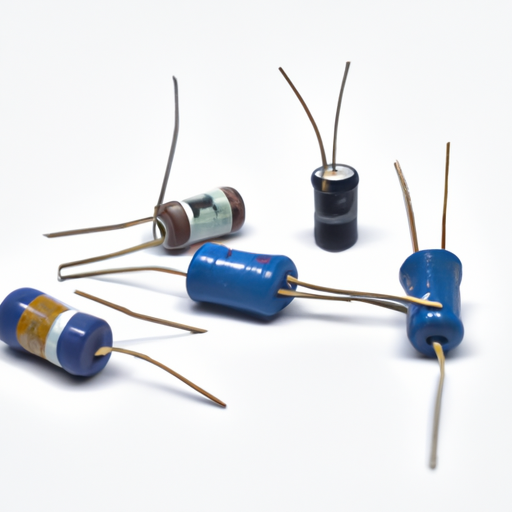
Capacitors are fundamental components in electronic circuits, playing a crucial role in storing and releasing electrical energy. They are passive electronic devices that can store electrical charge temporarily, making them essential for various applications in modern electronics. From power supply stabilization to signal processing, capacitors are integral to the functionality of countless devices, including smartphones, computers, and industrial machinery. This article will explore the important product categories of capacitors, their characteristics, applications, and emerging trends in capacitor technology.
Capacitors can be classified based on different criteria, primarily their dielectric material and their application. Understanding these classifications helps in selecting the right capacitor for specific electronic needs.
1. **Ceramic Capacitors**: These capacitors use ceramic as the dielectric material. They are widely used due to their small size, low cost, and stability over a range of temperatures and frequencies. Ceramic capacitors are ideal for high-frequency applications and are commonly found in RF circuits.
2. **Electrolytic Capacitors**: Known for their high capacitance values, electrolytic capacitors use an electrolyte as the dielectric. They are polarized, meaning they have a positive and negative terminal, which makes them suitable for DC applications. However, they are not ideal for high-frequency applications due to their larger size and lower frequency response.
3. **Film Capacitors**: These capacitors use a thin plastic film as the dielectric. They are known for their stability, low loss, and excellent performance in high-frequency applications. Film capacitors are often used in audio equipment and power electronics.
4. **Tantalum Capacitors**: Tantalum capacitors are known for their high capacitance and small size. They use tantalum metal as the anode and are often used in applications where space is limited, such as in mobile devices and laptops. However, they are more expensive than other types of capacitors.
5. **Supercapacitors**: Also known as ultracapacitors, supercapacitors have a very high capacitance value and can store large amounts of energy. They are used in applications requiring rapid charge and discharge cycles, such as in energy storage systems and regenerative braking in electric vehicles.
1. **Power Capacitors**: These capacitors are used in power systems to improve power factor and voltage stability. They are essential in industrial settings where large motors and generators are used.
2. **Signal Capacitors**: Signal capacitors are designed to handle small signals and are crucial in audio and radio frequency (RF) applications. They help maintain signal integrity and reduce noise.
3. **Timing Capacitors**: These capacitors are used in timing circuits, such as oscillators and timers. They play a vital role in determining the timing intervals in various electronic devices.
4. **Coupling and Decoupling Capacitors**: Coupling capacitors allow AC signals to pass while blocking DC, making them essential in signal processing. Decoupling capacitors, on the other hand, stabilize power supply voltages by filtering out noise.
**Characteristics and Applications**: Ceramic capacitors are non-polarized and can operate over a wide range of temperatures. They are commonly used in applications such as decoupling, filtering, and timing circuits.
**Advantages and Disadvantages**: The advantages of ceramic capacitors include their small size, low cost, and high reliability. However, they can exhibit capacitance changes with voltage (voltage coefficient) and temperature, which may affect performance in sensitive applications.
**Characteristics and Applications**: Electrolytic capacitors are polarized and typically used in power supply circuits, audio equipment, and energy storage applications due to their high capacitance values.
**Advantages and Disadvantages**: They offer high capacitance in a relatively small package, but their polarization limits their use in AC applications. Additionally, they have a shorter lifespan compared to other capacitor types and can fail if subjected to reverse voltage.
**Characteristics and Applications**: Film capacitors are known for their stability and low loss, making them suitable for high-frequency applications, audio circuits, and power electronics.
**Advantages and Disadvantages**: They have excellent performance characteristics and a long lifespan. However, they tend to be larger and more expensive than ceramic capacitors, which may limit their use in compact designs.
**Characteristics and Applications**: Tantalum capacitors are compact and provide high capacitance values, making them ideal for applications in mobile devices, laptops, and medical equipment.
**Advantages and Disadvantages**: They offer excellent performance and reliability, but their cost can be a drawback. Additionally, they are sensitive to voltage spikes, which can lead to catastrophic failure.
**Characteristics and Applications**: Supercapacitors can store large amounts of energy and are used in applications requiring rapid charge and discharge cycles, such as in electric vehicles and renewable energy systems.
**Advantages and Disadvantages**: They have a long cycle life and can charge and discharge quickly. However, they have lower energy density compared to traditional batteries, which limits their use in long-term energy storage applications.
**Role in Power Factor Correction**: Power capacitors are essential for improving power factor in industrial settings, which helps reduce energy costs and improve system efficiency.
**Applications in Industrial Settings**: They are commonly used in substations, motor drives, and other industrial applications to stabilize voltage and reduce losses.
**Importance in Audio and RF Applications**: Signal capacitors are crucial in maintaining signal integrity in audio and RF applications, where even small amounts of noise can significantly impact performance.
**Characteristics for Signal Integrity**: They are designed to have low equivalent series resistance (ESR) and high-frequency response, making them ideal for high-fidelity audio and communication systems.
**Role in Oscillators and Timers**: Timing capacitors are used in oscillators and timers to determine the timing intervals in various electronic devices, such as clocks and microcontrollers.
**Applications in Timing Circuits**: They are essential in applications where precise timing is critical, such as in automotive electronics and consumer devices.
**Importance in Signal Processing**: Coupling capacitors allow AC signals to pass while blocking DC, making them essential in audio and communication circuits.
**Applications in Power Supply Circuits**: Decoupling capacitors stabilize power supply voltages by filtering out noise, ensuring that sensitive components receive clean power.
Recent advancements in materials science have led to the development of new dielectric materials that enhance the performance of capacitors, allowing for higher capacitance values and improved reliability.
As electronic devices become smaller and more compact, the demand for miniaturized capacitors has increased. Innovations in manufacturing techniques have enabled the production of smaller capacitors without compromising performance.
With growing concerns about environmental impact, manufacturers are focusing on developing eco-friendly capacitors that minimize waste and use sustainable materials. This trend is expected to shape the future of capacitor technology.
In summary, capacitors are vital components in modern electronics, with various types and applications that cater to different needs. From power factor correction to signal processing, their importance cannot be overstated. As technology continues to evolve, advancements in capacitor materials, miniaturization, and sustainability will shape the future of this essential electronic component. Understanding the different product categories of capacitors and their applications is crucial for engineers and designers in creating efficient and reliable electronic systems.
- "Capacitors: Principles and Applications" by John Smith
- "The Art of Electronics" by Paul Horowitz and Winfield Hill
- IEC 60384: Fixed capacitors for use in electronic equipment
- EIA-198: Standard for Capacitors
This comprehensive exploration of capacitors highlights their significance in electronic circuits and the various categories that serve different functions. As technology advances, the role of capacitors will continue to evolve, making them a critical area of study for anyone involved in electronics.