Language:en 
- zh-cn
- en
- ja
- fr
- ko
- de
- pt-pt
- es
BEYOND CIRCUIT


In the world of electronics, resistors play a crucial role in controlling the flow of electric current. Among the various types of resistors, adjustable resistors stand out due to their versatility and functionality. An adjustable resistor, as the name suggests, allows users to modify its resistance value, making it an essential component in many electronic circuits. This article will delve into the nature of adjustable resistors, their types, how they work, their applications, advantages and disadvantages, and future trends in the field.
At the heart of electrical engineering lies Ohm's Law, which states that the current flowing through a conductor between two points is directly proportional to the voltage across the two points and inversely proportional to the resistance of the conductor. Resistors are fundamental components that help control this current flow, ensuring that circuits operate safely and effectively.
Resistors can be broadly categorized into two types: fixed and variable. Fixed resistors have a predetermined resistance value, while variable resistors allow for adjustments. Adjustable resistors fall under the category of variable resistors, providing users with the ability to change resistance as needed.
An adjustable resistor is a type of resistor whose resistance can be varied manually or electronically. This feature makes them invaluable in applications where precise control of current or voltage is necessary.
1. **Potentiometers**: These are three-terminal devices that can adjust voltage levels in a circuit. They are commonly used in volume controls for audio equipment.
2. **Rheostats**: Rheostats are two-terminal devices used to control current. They are often found in applications requiring high power, such as in motor speed control.
3. **Trimmers**: These are small potentiometers used for fine-tuning circuits. They are typically adjusted only once during the setup of a device.
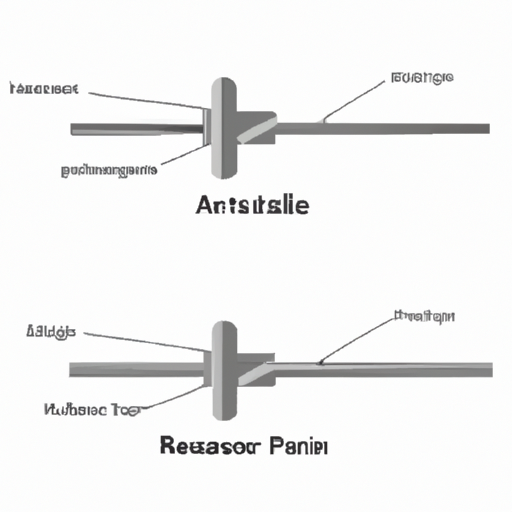
Adjustable resistors are constructed using a resistive element, a wiper that moves along the element, and terminals for connection. The resistive element can be made from carbon, metal film, or wire, depending on the application and required precision.
1. **Physical Movement**: In mechanical adjustable resistors like potentiometers and rheostats, the user physically turns a knob or slider to change the position of the wiper along the resistive element, thus altering the resistance.
2. **Electronic Control**: Digital potentiometers use electronic signals to adjust resistance, allowing for more precise control and integration with microcontrollers.
Adjustable resistors are used in various applications, including:
1. **Voltage Dividers**: They can create specific voltage levels from a higher voltage source.
2. **Signal Processing**: In audio and radio equipment, they help in adjusting signal levels.
3. **Calibration and Tuning**: They are essential in calibrating devices to ensure accurate readings and performance.
1. **Audio Equipment**: Adjustable resistors are commonly used in volume controls, allowing users to set their desired sound levels.
2. **Lighting Control**: Dimmers utilize adjustable resistors to control the brightness of lights.
1. **Motor Speed Control**: Rheostats are often employed in industrial settings to adjust the speed of electric motors.
2. **Temperature Sensors**: Adjustable resistors can be used in temperature sensing applications to calibrate readings.
1. **Laboratory Experiments**: Adjustable resistors are frequently used in educational settings for experiments involving circuit design and analysis.
2. **Prototyping**: Engineers and hobbyists use adjustable resistors in prototypes to test and refine circuit designs.
1. **Flexibility in Circuit Design**: Adjustable resistors allow for easy modifications in circuit parameters, making them ideal for experimental and prototype applications.
2. **Ease of Use in Tuning and Calibration**: They simplify the process of tuning circuits for optimal performance.
1. **Potential for Wear and Tear**: Mechanical adjustable resistors can wear out over time due to physical movement, leading to reliability issues.
2. **Limited Precision Compared to Fixed Resistors**: While adjustable resistors offer flexibility, they may not provide the same level of precision as fixed resistors, especially in critical applications.
1. **Resistance Range**: It’s essential to select an adjustable resistor with a suitable resistance range for the intended application.
2. **Power Rating**: The power rating indicates how much power the resistor can handle without overheating. This is crucial for ensuring safety and reliability.
3. **Physical Size and Form Factor**: Depending on the application, the size and shape of the adjustable resistor may be important for fitting into a circuit or device.
Several reputable brands manufacture adjustable resistors, including Bourns, Vishay, and Alpha. Each brand offers various models tailored to different applications, so it’s advisable to research and select the best fit for your needs.
1. **Digital Potentiometers**: These devices are gaining popularity due to their precision and ease of integration with digital systems. They can be controlled via microcontrollers, allowing for automated adjustments.
2. **Smart Resistors**: The rise of the Internet of Things (IoT) is leading to the development of smart resistors that can communicate with other devices, enabling remote control and monitoring.
As technology advances, the demand for more precise and flexible components like adjustable resistors will continue to grow. This trend will likely lead to innovations that enhance their functionality and integration into modern electronic systems.
Adjustable resistors are vital components in the realm of electronics, providing flexibility and control in circuit design. Their ability to modify resistance values makes them indispensable in various applications, from consumer electronics to industrial machinery. As technology evolves, the future of adjustable resistors looks promising, with advancements that will enhance their capabilities and integration into smart systems. For anyone interested in electronics, understanding adjustable resistors is essential for exploring the vast possibilities within this field.
For further reading and exploration of adjustable resistors and their applications, consider the following resources:
1. "The Art of Electronics" by Paul Horowitz and Winfield Hill
2. "Electronic Principles" by Albert Malvino and David Bates
3. Websites like Digi-Key, Mouser Electronics, and the IEEE Xplore Digital Library for the latest research and product offerings in the field of electronics.